 CareTime
Whom to check first tonight, from records alone.
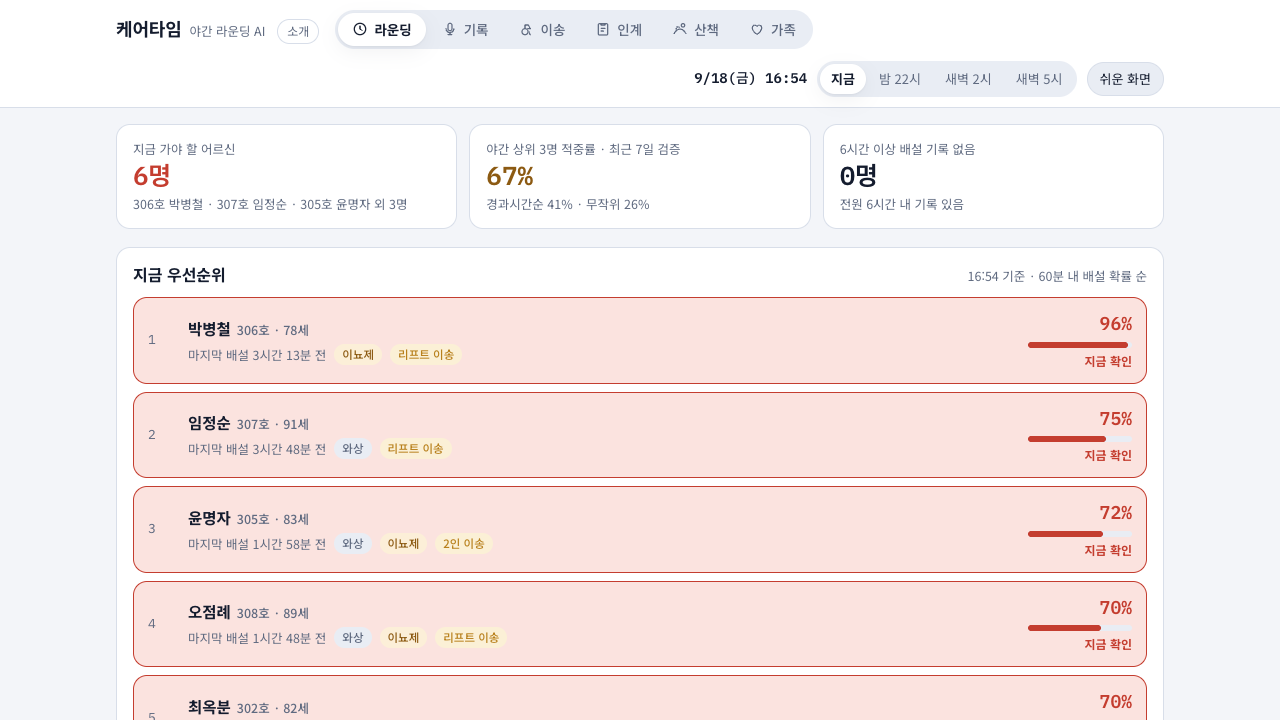
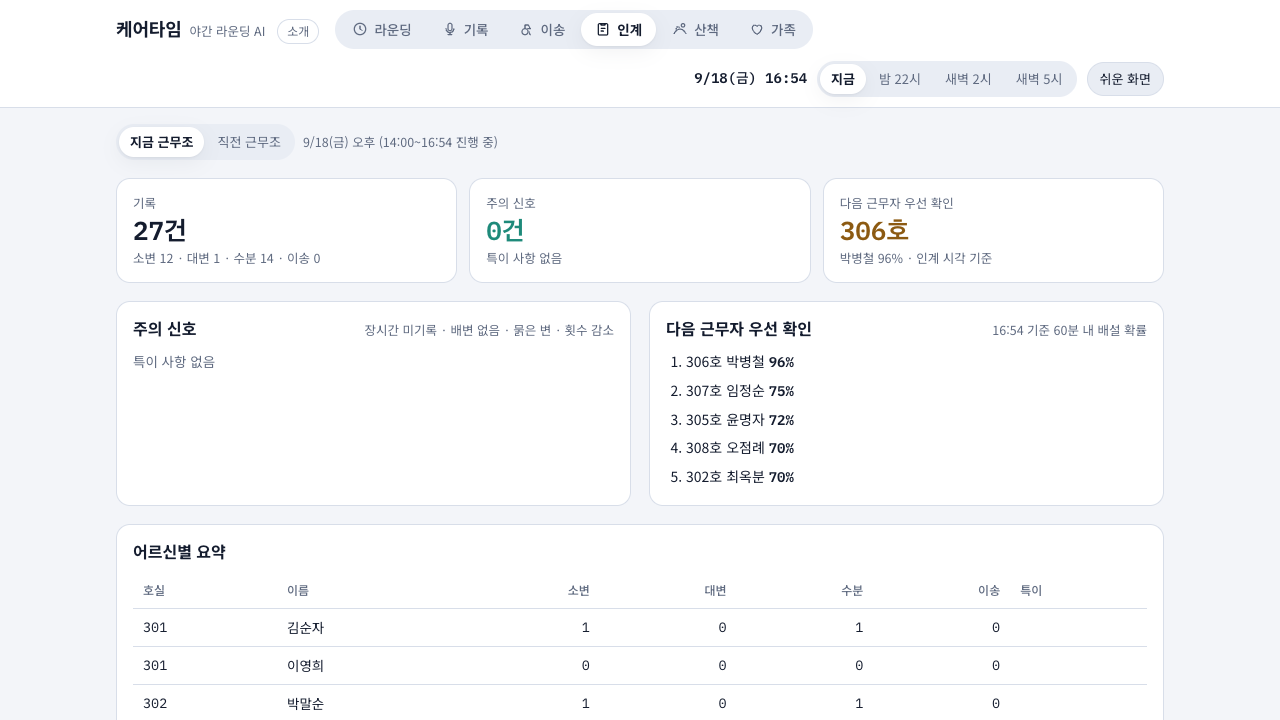
In a Korean nursing home, one care worker looks after sixteen residents at night. Bedridden residents cannot say when they need a change. CareTime uses no sensors: from the last 30 days of records it estimates each resident's probability of needing care within 60 minutes and orders the night round.
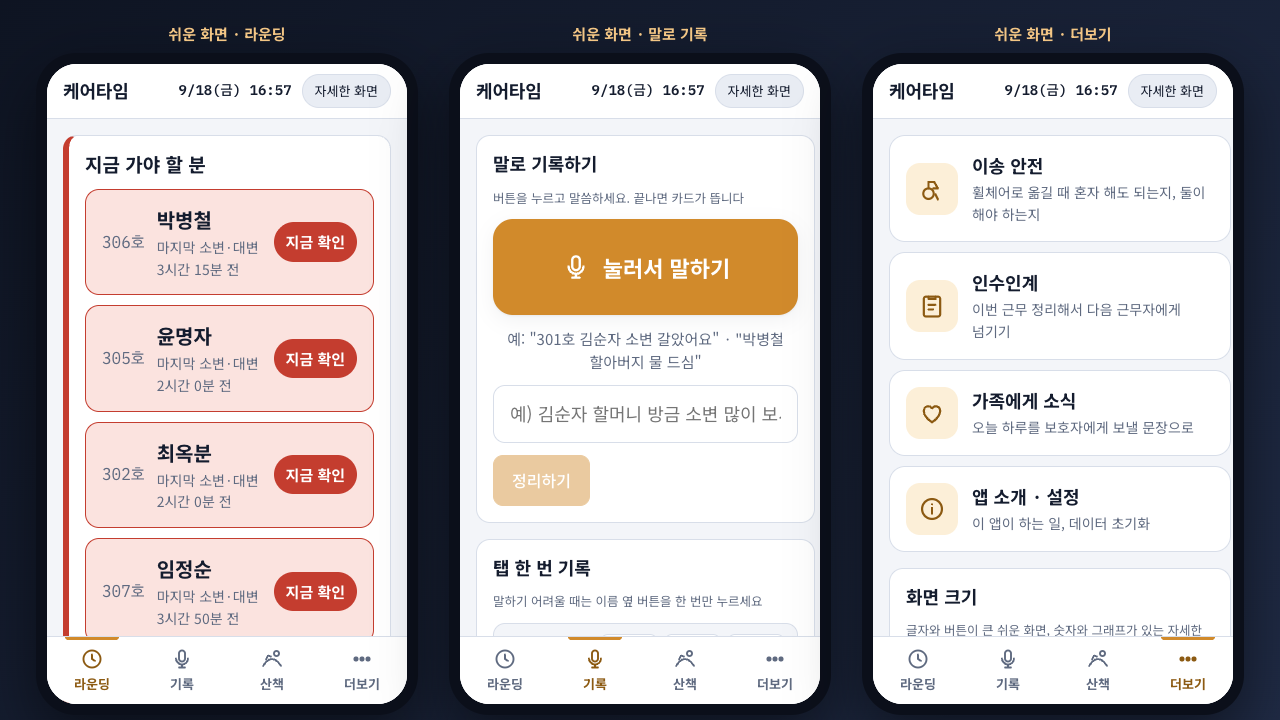
No install, no login, free. On a phone it opens in a simplified mode designed for care workers in their 40s–60s. The app's interface is in Korean. All 16 residents and 9,000+ records are synthetic data generated by the app.
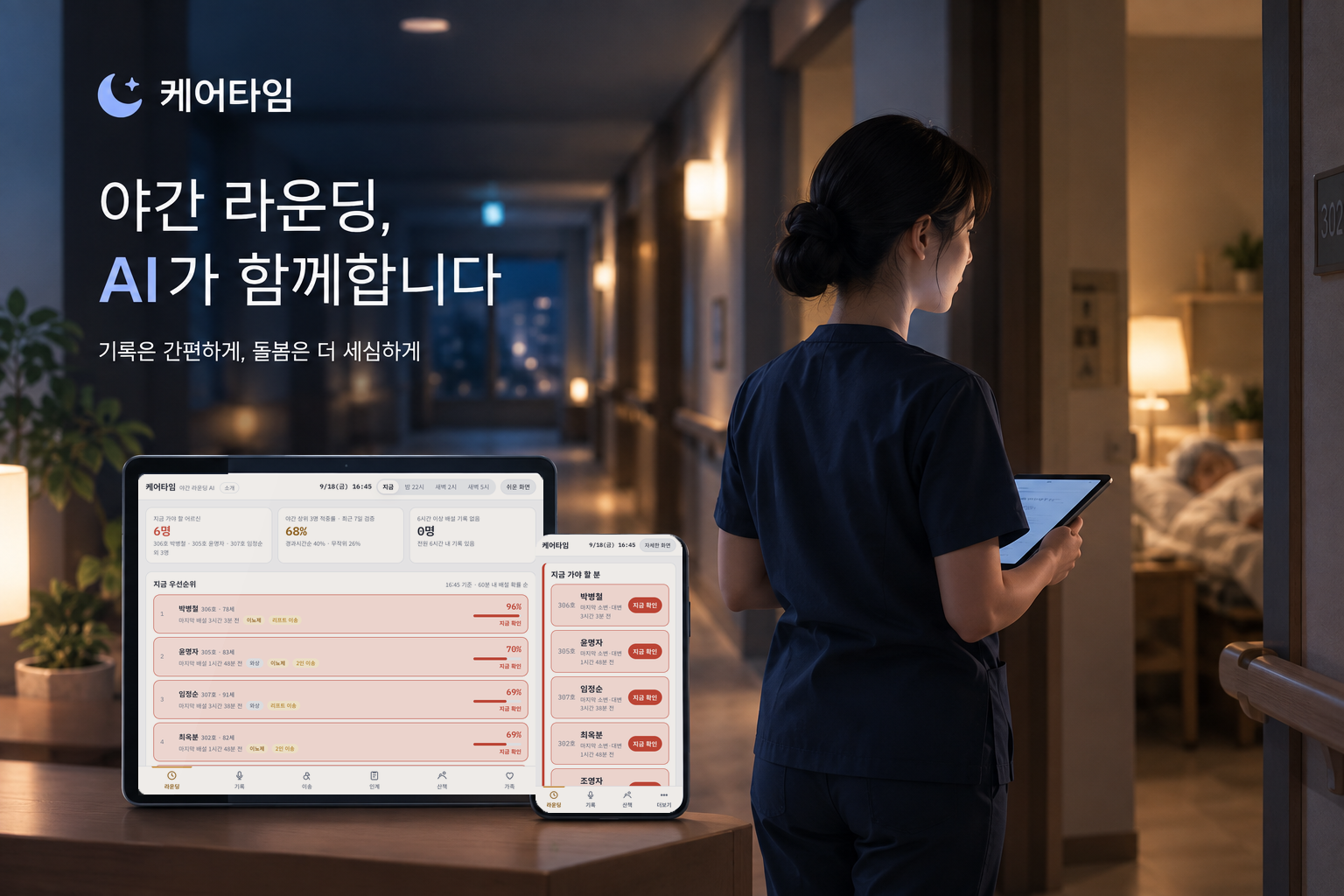
The problem
As heard on the floor
Residents per care worker on the night shift. About ten by day.
Bedridden residents cannot report that they need a change. Late discovery means skin damage, and the worker walks every room not knowing where to go first.
Diaper sensors exist, but they are expensive, residents pull them off, and small facilities cannot adopt them. Yet excretion records are already written every day. CareTime uses those.
AI in two layers
Prediction runs in the browser; generation only where it is needed
Logistic regression trained in the browser
- Each resident's 30-day history is sliced into 15-minute windows, about 30,000 training samples. The label: "was there an event within the next 60 minutes?"
- Features: time of day, minutes since last event, per-resident rates and intervals, time since fluids, meals and diuretics, and an estimated bladder-volume index.
- The last 7 days are held out for validation only.
- Training finishes in under a second on the device. No external server.
Upstage Solar, with rule-based fallback
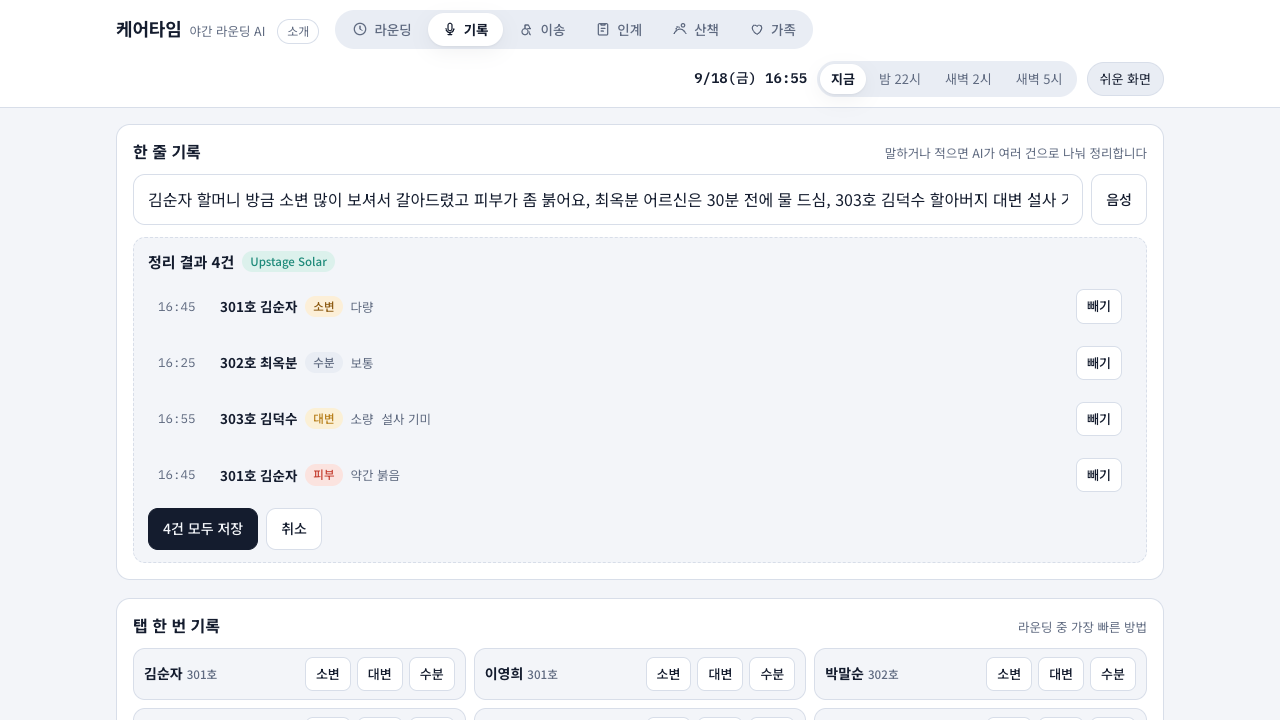
- Structuring spoken notes. One sentence covering several residents and event types is split into separate records.
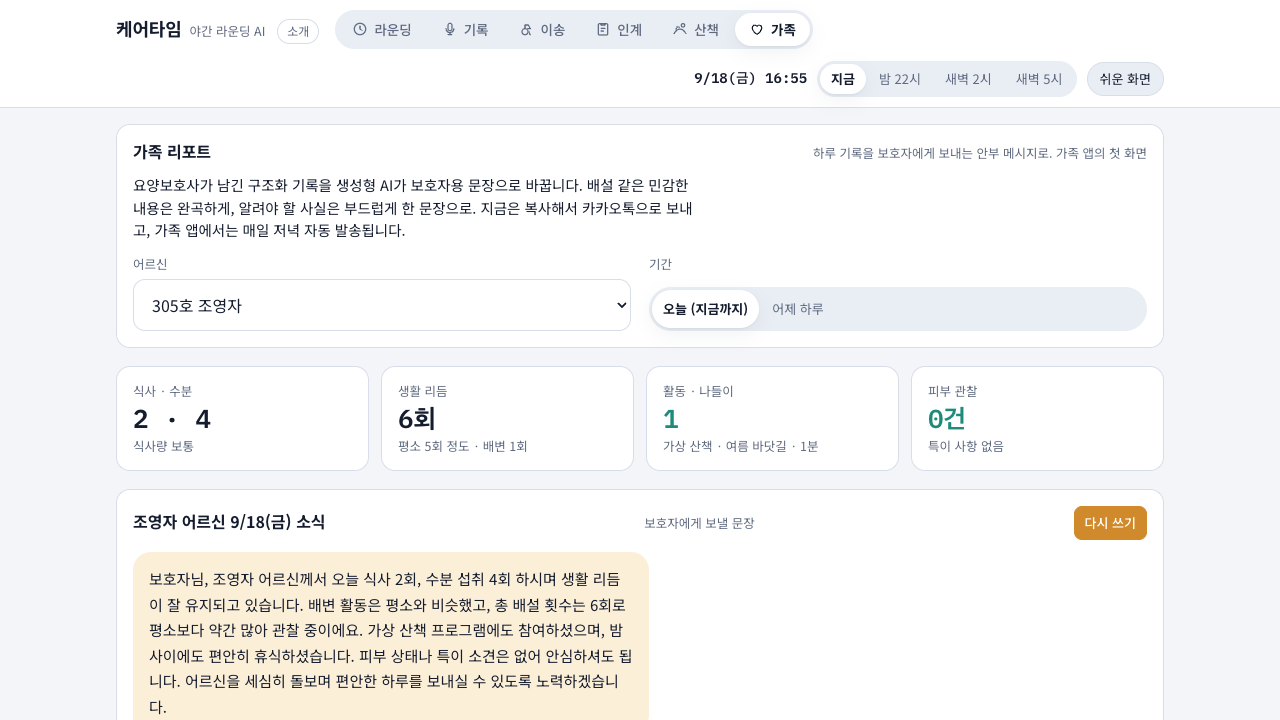
- Family report. A day's records become a gentle update for the family.
- Virtual walk. A reminiscence script written from a resident's hometown and life story, read aloud by the browser.
- If the API does not respond, rules take over and the service never stops.
We measured it
7-day holdout · share of night slots where the top-3 picks actually had an event
0.5 is random
These numbers are shown inside the app's About tab together with the model weights. Press "retrain" and they are recomputed in front of you.
Screens
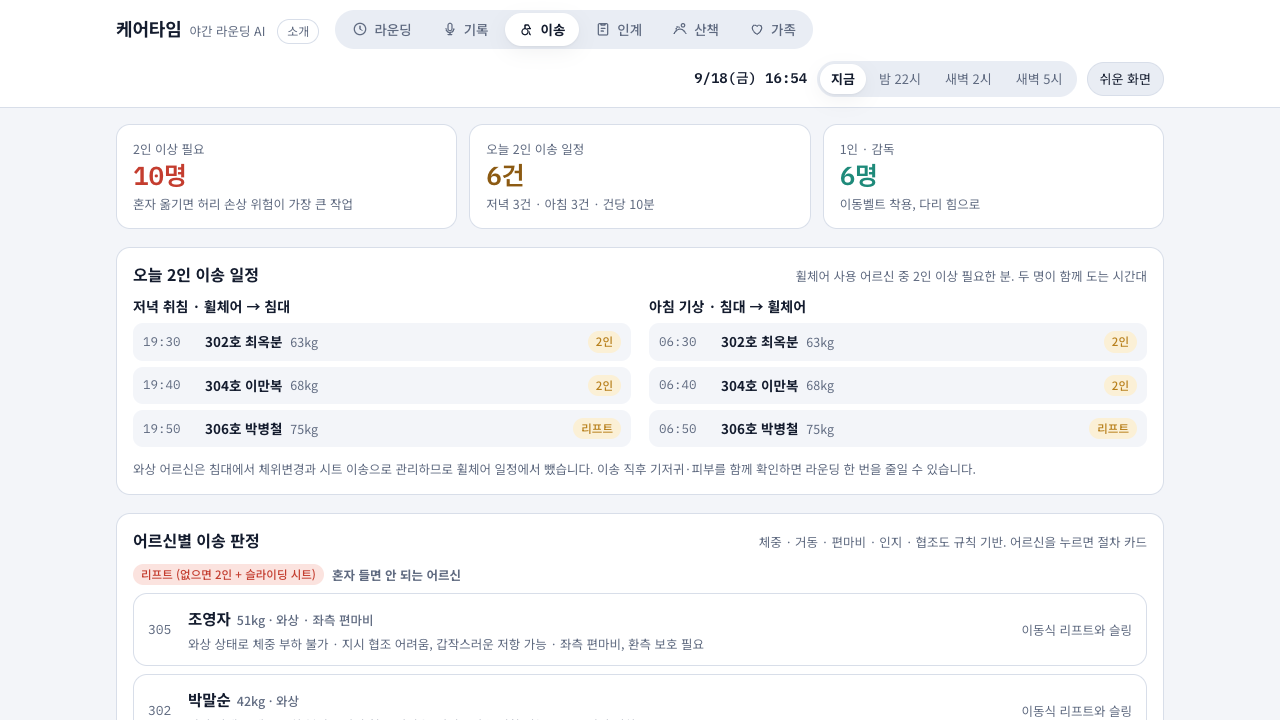
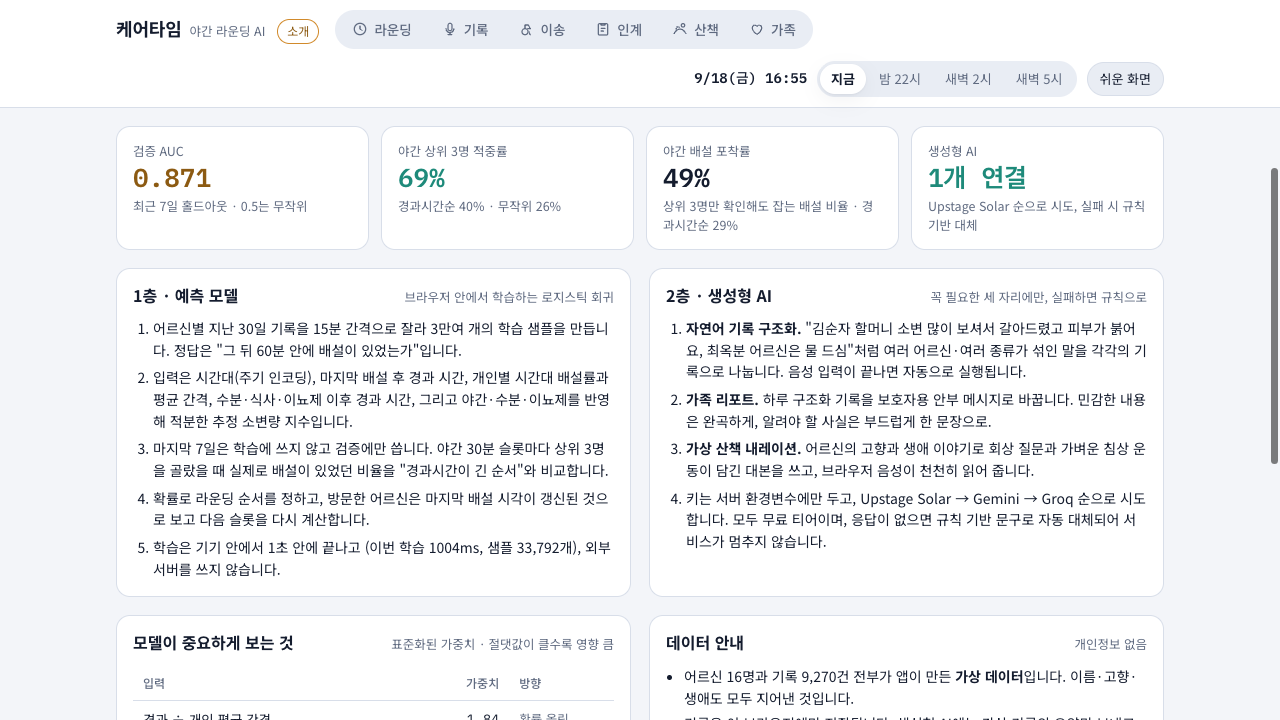
Detailed view on desktop, simplified view on phones (interface in Korean)

Live demo
The deployed app runs right here. Use the time buttons at the top right to jump to 22:00 or 02:00.
Voice input needs the microphone permission, which only appears in a new window. On a phone the simplified mode opens by default.
Data and tools
No personal data, no paid APIs
About the data
- All 16 residents and every record are synthetic, generated by the app. Names, hometowns and life stories are invented.
- Records stay in the browser; only summaries go to the generative model.
- In a real deployment, a facility's own records or diaper-sensor signals would be fed in the same format.
How it was made
It started from night-shift stories heard directly from care workers. Entry to the Wanted AI Championship 2026.